

A yoga mat natural rubber gently supports your body and breath, offering reliable traction that helps you stay connected during every pose. These mats draw from sustainable sources, providing a non-slip surface that often feels more secure with use. Whether your practice happens at home, in a quiet studio, or during mindful travel, a natural rubber mat can become a nurturing part of your daily wellness journey.
Many turn to these options for their kind feel against the skin, thoughtful cushioning, and ability to stay fresh without synthetic chemicals. The materials come from responsibly harvested trees or natural layers like cork, creating harmony between personal comfort and planetary care. This makes them especially supportive when building a consistent routine, perhaps alongside essentials for home practice.
We selected these mats because they align with conscious living offering durability, natural grip, and ease of care. Each one helps you choose what is most important to your practice, whether for portability, extra cushion, or guided alignment.
This post may contain affiliate links which means we may receive a commission for purchases made through links. As an Amazon Associate we earn from qualifying purchases. Learn more on our Privacy Policy.
The Best Yoga Mat Natural Rubber at a Glance
- Best for daily use: Manduka eKOLite
- Best for travel: JadeYoga Travel Mat
- Best for hot yoga: Satori Concept Cork Mat
- Best balanced grip: JadeYoga Harmony
- Best for lightweight travel: Manduka eKO SuperLite
- Best for longer sessions: Manduka eKO 5mm
- Best for intense flows: YOTTOY Hot Yoga Mat
- Best for alignment: Y O Gayo Cork
Best Natural Rubber Yoga Mats

At 4mm, this mat offers comforting cushion and grounded contact for varied practices. The rippled texture provides steady control, and closed-cell construction keeps it hygienic. Made from non-toxic tree rubber, it nurtures the skin and endures gentle daily use. Many unroll it permanently as part of their home rhythm.
Key Features:
Material: 100% natural tree rubber, non-toxic
Best for: Home practice, studio classes, mixed styles
Notable quality: Rippled catch-grip, tear-resistant
Dimensions: 71″ x 24″ x 4mm
Weight: 5.2 pounds

This slim mat rolls tightly and weighs lightly, making it easy to carry. Open-cell natural rubber gives strong non-slip traction on various surfaces. The brand plants a tree per mat, adding quiet care for the earth. It supports those who practice in shifting spaces with steady presence.
Key Features:
Material: Responsibly sourced natural rubber
Best for: Travel, commuting, all styles
Notable quality: Tree planted per purchase, made in USA
Dimensions: 68″ or 74″ x 24″ x 3mm
Weight: 3 pounds

Cork grows grippier with warmth, supporting smooth movement in dynamic or heated classes. The thick rubber base cushions joints kindly. Extra size allows full expression, and it cleans with water alone. This feels nurturing during more vigorous flows.
Key Features:
Material: Natural cork + tree rubber
Best for: Hot yoga, vinyasa, longer sessions
Notable quality: Sweat-activated grip, nature-inspired designs
Dimensions: 80″ x 26″ x 6mm
Weight: 5.5 pounds

This mat balances thickness, grip, and weight for satisfying daily practice. Open-cell natural rubber cushions and stabilizes without synthetics. It stays hygienic and supports eco-conscious choices with tree-planting. Ideal for home or studio consistency.
Key Features:
Material: Natural open-cell rubber
Best for: Home exercise, stretching, meditation
Notable quality: Non-slip stability, tree planted per mat
Dimensions: 68″ x 24″ x 0.19″ (3/16″)
Weight: 4.2 pounds

This mat folds compactly for easy packing, bringing familiar support wherever you go. Its 1.5mm thickness keeps it light while delivering textured grip from natural tree rubber. The closed-cell surface resists moisture for quick cleaning, helping maintain a fresh, inviting space. It’s a gentle choice for those who value consistency in changing environments.
Key Features:
Material: Sustainably harvested natural tree rubber, 99% latex-free
Best for: Travel, outdoor sessions, daily commuting
Notable quality: Foldable design with soft textured surface
Dimensions: 71″ x 24″ x 1.5mm
Weight: 2.1 pounds
The 5mm thickness provides extra softness and protection for extended holds. Rippled texture enhances grip and stability across styles. Closed-cell natural rubber prevents moisture buildup. It offers a nurturing, next-to-skin feel that lasts.
Key Features:
Material: 100% natural tree rubber, 99% latex-free
Best for: Longer sessions, strong flows, restorative
Notable quality: Rippled catch-grip, tear-resistant
Dimensions: 71″ x 26″ x 5mm
Weight: 7 pounds

This mat layers natural rubber with coconut fibers for strong anti-slip and durability. The 5mm thickness cushions joints during vigorous practice. Four-layer design adds rebound and stability. It includes a strap and bag for gentle portability.
Key Features:
Material: Natural rubber + coconut fibers, PU surface
Best for: Hot yoga, intense sessions
Notable quality: Four-layer anti-tear structure, includes strap and bag
Dimensions: 72″ x 26″ x 5mm
Weight: 6 pounds
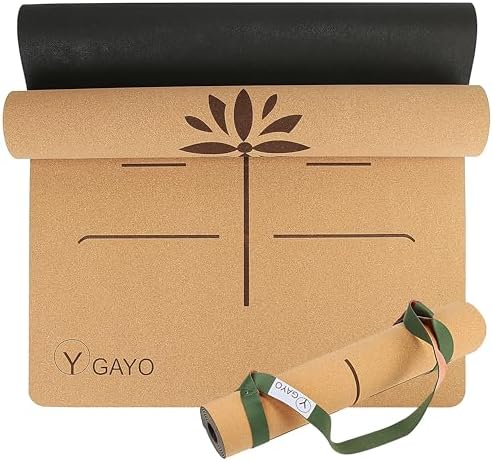
Gentle lines guide placement for refined posture. Cork and dense rubber create stable grounding, with wider space for comfort. It resists moisture for easy care. A supportive companion as practice deepens.
Key Features:
Material: Natural cork + tree rubber
Best for: Alignment work, vinyasa, ashtanga
Notable quality: Built-in alignment lines, larger surface
Dimensions: 72″ x 26″ x 5mm
Weight: 8.4 pounds
How to Choose the Right Natural Rubber Yoga Mat
Choosing a yoga mat made from natural rubber is about understanding how it supports your body, your movement, and your daily routine. The right mat should feel stable under your hands and feet, protect your joints, and stay reliable across different styles of practice.
Focusing on a few practical factors can help you make a confident choice.
Thickness and Cushioning
Mat thickness directly affects comfort and joint support.
- 1.5 to 3mm mats offer a close-to-the-ground feel. They are easier to carry and work well for balance-focused practices and travel.
- 4 to 6mm mats provide more cushioning for knees, wrists, and hips. These are better suited for longer sessions, restorative poses, or frequent floor work.
Many people find that a 4 to 5mm mat offers the best balance between stability and comfort. If joint sensitivity is a concern, choosing a slightly thicker mat can reduce strain over time.
For help matching thickness and size to your body and practice style, see our full Yoga Mat Size Guide.
Grip and Slip Resistance
Grip is one of the main reasons practitioners choose natural rubber mats. The way grip works depends on the surface material and how you practice.
- Closed-cell natural rubber resists moisture and is easy to clean. It works well for dry practices and regular home use.
- Open-cell rubber offers very strong traction but can absorb sweat, which may require more frequent care.
- Cork surfaces increase grip when warm or slightly damp, making them effective for hot yoga and faster-paced flows.
If slipping has been an issue during transitions or standing poses, material choice matters. Our guide on yoga mat non slip performance explains how different surfaces behave in practice conditions.
Weight and Portability
How often you move your mat should influence your choice.
- Mats under 4 pounds are easier to carry to classes or pack for travel.
- Heavier mats provide more stability and tend to stay firmly in place during strong flows.
Foldable mats and those with straps or carrying bags can make regular practice more manageable, especially if you commute or practice outdoors.
Material Quality and Health Considerations
Natural rubber yoga mats are made from rubber tree sap rather than synthetic plastics. Many are free from PVC, phthalates, and harsh chemical adhesives. This reduces exposure to materials that can release odors or irritants, especially during warm or sweaty sessions.
FAQs About Yoga Mat Natural Rubber
Is a yoga mat natural rubber supportive for daily practice?
Yes, it offers gentle traction and comfort that many find grounding over time. Natural materials feel kind and sustainable.
What makes these mats a healthier choice?
They avoid harsh synthetics, providing cleaner surfaces and eco-friendly sourcing. Many include tree-planting initiatives.
Does a yoga mat non slip perform in sweaty sessions?
Many do, with textures or cork enhancing grip as you warm. They help maintain focus and stability.
How do I care for a natural rubber mat?
Wipe the mat with water and a mild natural cleanser. Avoid harsh chemicals and prolonged sun exposure, which can dry out rubber. Allow the mat to air dry fully before rolling it up.
For additional care practices that support both body and routine, see our guide to Ayurvedic oils for skin and self-care.
Enjoyed This Guide? Continue Your Journey
Here are a few more articles you may love: