


Let’s talk ghee vs butter. If you’ve ever cooked with both butter and ghee, you’ve probably noticed that they share a similar golden hue — but their effects on the body couldn’t be more different. In Ayurveda, ghee is considered one of the most sacred and healing foods, often referred to as liquid gold. It nourishes the body, supports digestion, and strengthens the mind, while butter, though delicious, is seen as heavier and harder to digest.
Both come from the same source — milk — yet the process of clarifying butter into ghee transforms it entirely. When butter is gently simmered, the milk solids and water are removed, leaving behind pure butterfat infused with subtle sweetness and nutty aroma. This transformation makes ghee lighter, cleaner, and more stable for cooking.
This post may contain affiliate links which means we may receive a commission for purchases made through links. As an Amazon Associate we earn from qualifying purchases. Learn more on our Privacy Policy.
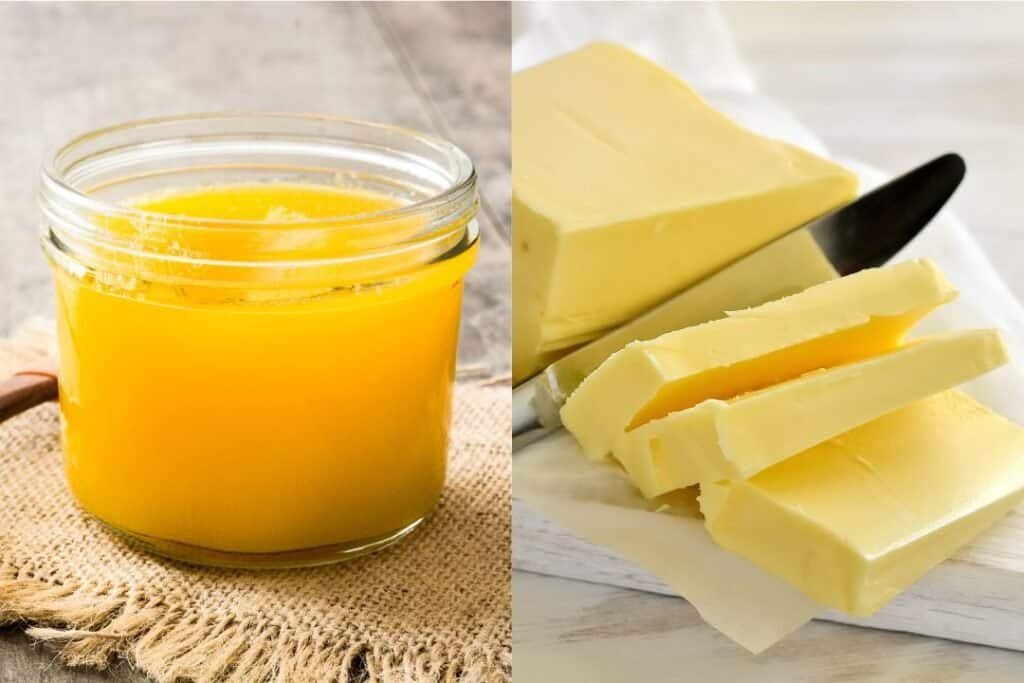
What Is Ghee and How Is It Made?
Making ghee from butter is a simple alchemical process that has been practiced for thousands of years in Ayurvedic kitchens. Traditionally, ghee is made by slowly heating organic, unsalted butter until the water evaporates and the milk solids separate. The golden liquid that remains is strained and stored — that’s ghee.
Here’s a simple recipe for ghee from butter:
Ingredients:
- 1 lb unsalted organic or grass-fed butter
Method:
- In a heavy-bottomed saucepan, melt the butter on low heat.
- Simmer gently for 15–25 minutes, until the milk solids sink and turn golden brown.
- Strain through a fine mesh or cheesecloth into a clean glass jar.
- Let it cool completely before sealing.
Ghee vs Butter: The Ayurvedic Perspective
From an Ayurvedic standpoint, ghee is considered sattvic — pure, peaceful, and balancing. It promotes clarity of mind, supports Ojas (vital energy), and nourishes all tissues. Butter, on the other hand, is rajasic — stimulating and heavy when consumed in excess.
Ghee also strengthens Agni (digestive fire) without aggravating Pitta, which means it improves digestion and assimilation of nutrients while reducing inflammation. Butter, especially when overused or taken cold, can dampen Agni, leading to sluggishness or mucus buildup, particularly in Kapha types.
In practical terms, this means ghee is easier to digest and metabolize. It’s suitable for all doshas when used in moderation — particularly Vata and Pitta — whereas butter is best enjoyed occasionally or in smaller amounts.
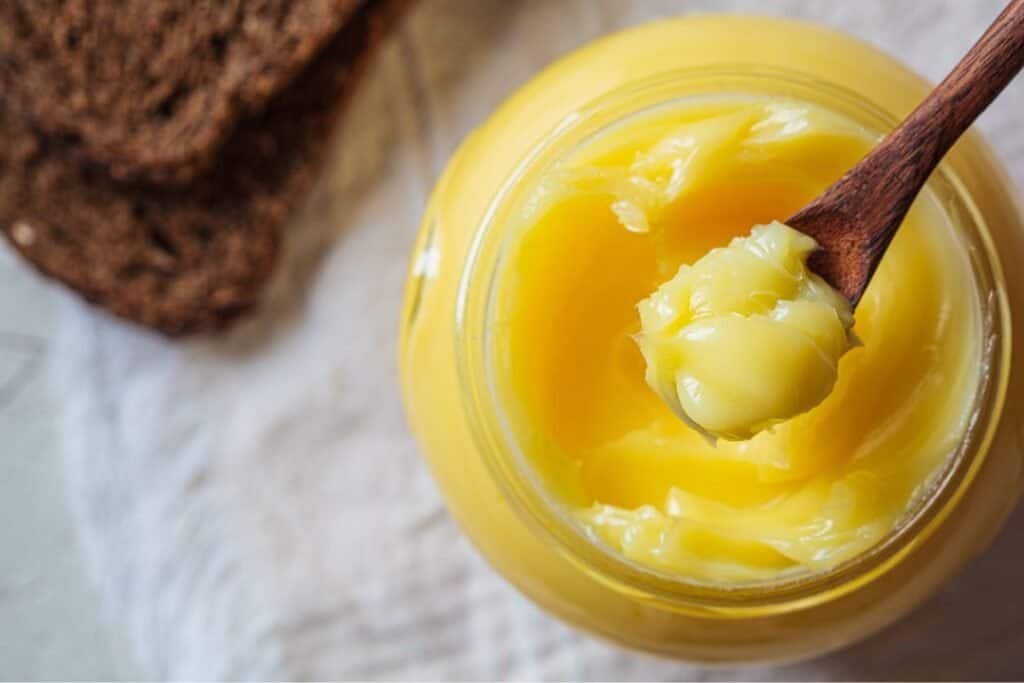
Ghee vs Clarified Butter
Many wonder if ghee and clarified butter are the same. While they’re similar, there’s a subtle difference. Clarified butter is heated only until the milk solids separate, while ghee is simmered longer, allowing the milk solids to caramelize slightly before being strained. This gives ghee its distinct nutty flavor and a longer shelf life — you don’t need to refrigerate ghee when stored in a cool, dry place.
Ghee Butter Benefits
Modern research is now confirming what Ayurveda has known for millennia — ghee is incredibly nourishing. It’s rich in fat-soluble vitamins (A, D, E, and K), conjugated linoleic acid (CLA), and butyrate — a short-chain fatty acid known to support gut health and immunity.
Some of the key benefits of ghee include:
- Supports digestion and absorption of nutrients
- Enhances memory and concentration
- Lubricates joints and tissues
- Promotes glowing skin and strong immunity
- Has a high smoke point (around 485°F), making it one of the most stable fats for cooking
Grass-fed and A2 ghee (made from A2 milk) are especially prized for their purity and nutrient density. Organic ghee ensures you’re avoiding toxins and antibiotics, while desi ghee made from indigenous cows is still considered the gold standard in Ayurveda.
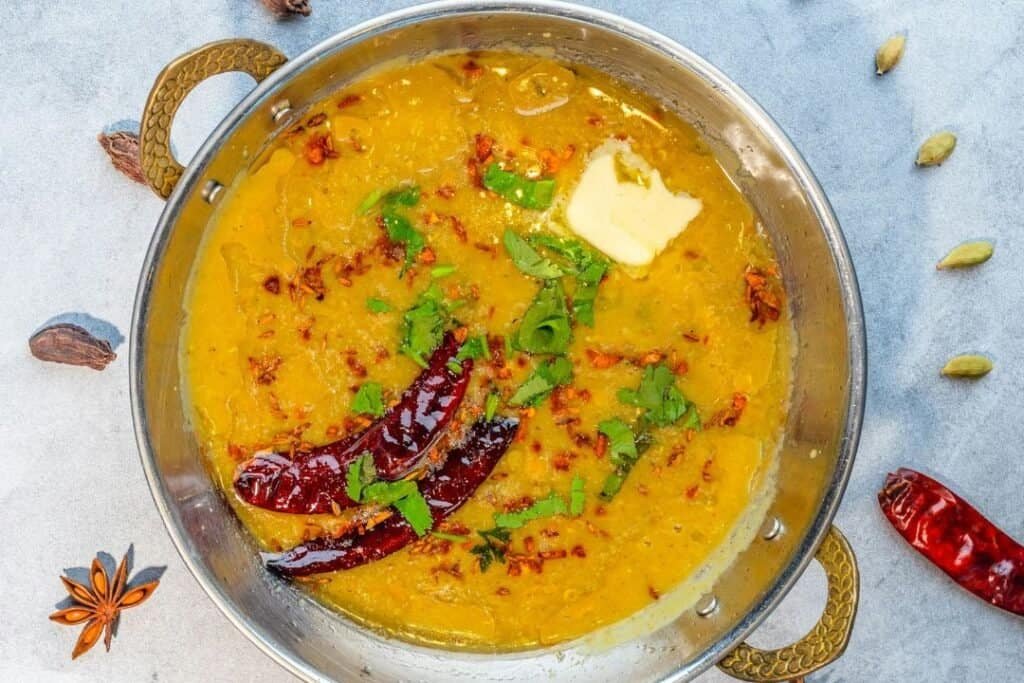
Is Ghee Good for You?
In moderation, absolutely. Ghee is one of Ayurveda’s most revered foods. Unlike many modern fats, it nourishes rather than depletes. For Vata and Pitta types, a spoonful of warm ghee on rice, lentils, or vegetables helps calm the nervous system and support healthy digestion.
For Kapha types, smaller amounts are ideal — think a light drizzle rather than a spoonful. Used properly, ghee helps balance the doshas, making it a universal food that heals rather than harms.
FAQs: Ghee vs Butter
Is ghee lactose-free?
Ghee is generally considered as lactose-free due to the milk solids that contain lactose being removed during the clarification process. This therefore makes it suitable for most people with lactose intolerance, though those with a severe dairy allergy to proteins like casein should still avoid it.
Is ghee better for you than butter?
Yes. Ghee is easier to digest, lactose-free, and rich in beneficial fatty acids that support gut and brain health.
Does ghee have to be refrigerated?
No. Because the milk solids are removed, ghee can be stored at room temperature for months — even longer if kept cool and sealed.
What’s ghee’s smoke point?
Around 485°F, making it ideal for sautéing, roasting, and frying without breaking down into harmful compounds.
Where to buy ghee?
Look for organic, grass-fed, or A2 ghee brands from health food stores or reputable online sources.
Is ghee healthy for everyday use?
Yes — in moderation. A teaspoon or two daily can support digestion, nourish tissues, and enhance overall well-being.