

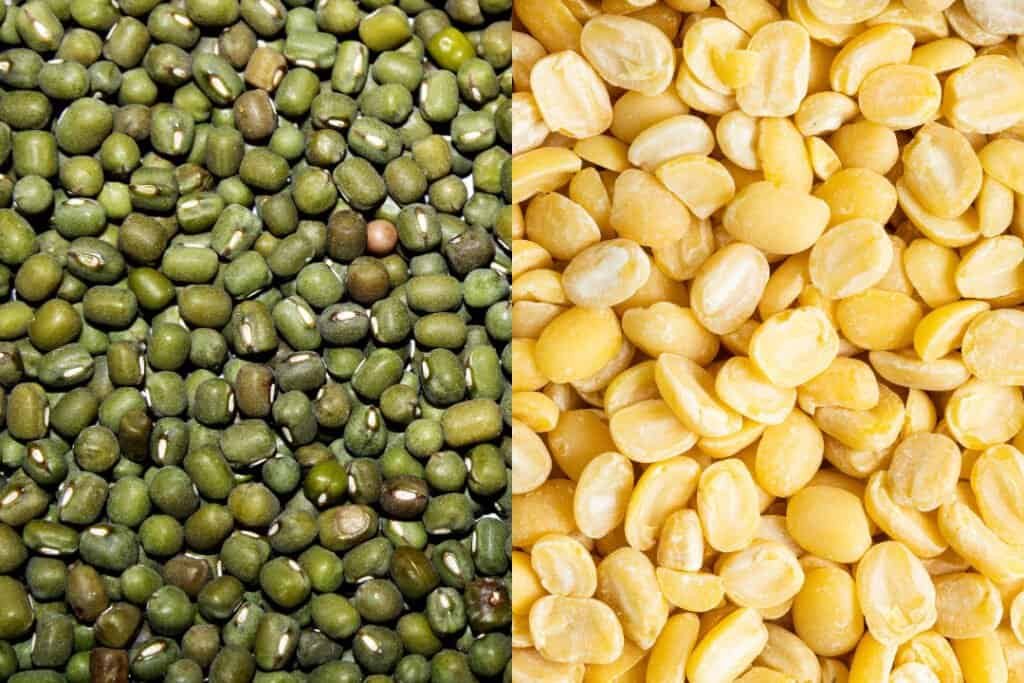
If you’ve ever browsed through an Indian grocery store or followed an Ayurvedic recipe, you’ve probably come across both mung beans and moong dhal. They sound similar and even look somewhat alike, but there are important distinctions between the two. Mung beans are the whole green legume, while moong dhal is the same bean with its skin removed and split in half. These simple differences in preparation change the way each one behaves in cooking and how they interact with your body in digestion.
In Ayurveda, both forms of the mung bean are considered nourishing, balancing, and cleansing. They are also light on the system, rich in protein, and easy to digest, making them a staple in Ayurvedic kitchens for thousands of years. Mung beans are especially loved because they are tridoshic. This means they can balance all three doshas when prepared appropriately. Whether you’re making a hearty stew, a gentle detox dish, or a simple porridge, mung beans are considered one of the most sattvic, or pure, foods you can eat.
Across cultures, you’ll find similar dishes that reflect the Ayurvedic use of mung beans. In Chinese cuisine, mung beans are used to make cooling soups that help clear excess heat, while in Indian households, they are turned into nourishing moong dhal or cooked with basmati rice into kitchari.
This post may contain affiliate links which means we may receive a commission for purchases made through links. As an Amazon Associate we earn from qualifying purchases. Learn more on our Privacy Policy.
Mung Beans vs Moong Dhal
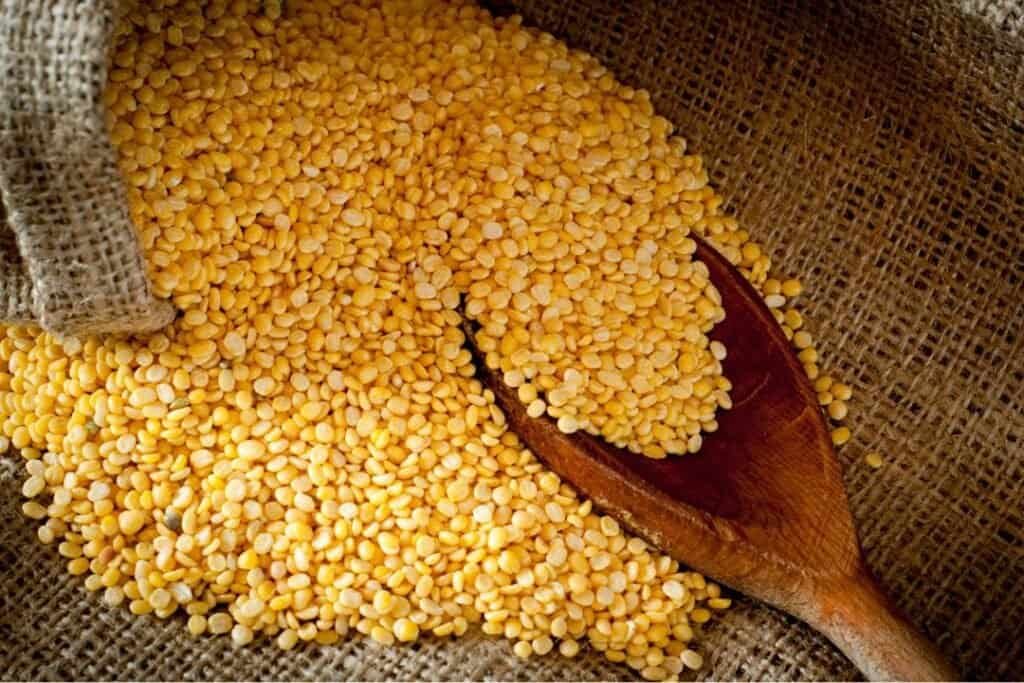
Now we have established that mung beans and moong dhal both come from the same seed – they do have differences in texture, cooking time, and digestibility, making them unique in the kitchen and in Ayurvedic practice. Whole mung beans are small, round, and green, with a slightly earthy flavor and more fiber from the intact husk. When this green husk is removed and the bean is split, it becomes moong dhal, a golden-yellow lentil that cooks quickly and becomes soft and creamy. This split form is gentler on the digestive system and is often recommended during cleansing or recovery.
In Ayurvedic cooking, whole mung beans are considered slightly heavier than moong dhal because of their fiber content, but they are still easy to digest compared to most other legumes. They are ideal for soups or hearty dishes where you want more texture. Moong dhal, on the other hand, is often used when the goal is restoration, lightness, and simplicity. It forms the base of the classic Ayurvedic dish kitchari – a soothing combination of moong dhal, basmati rice, and spices designed to reset digestion and balance all doshas.
Read: How to take Oregano Oil and Black Seed Oil
Mung Beans in Ayurveda
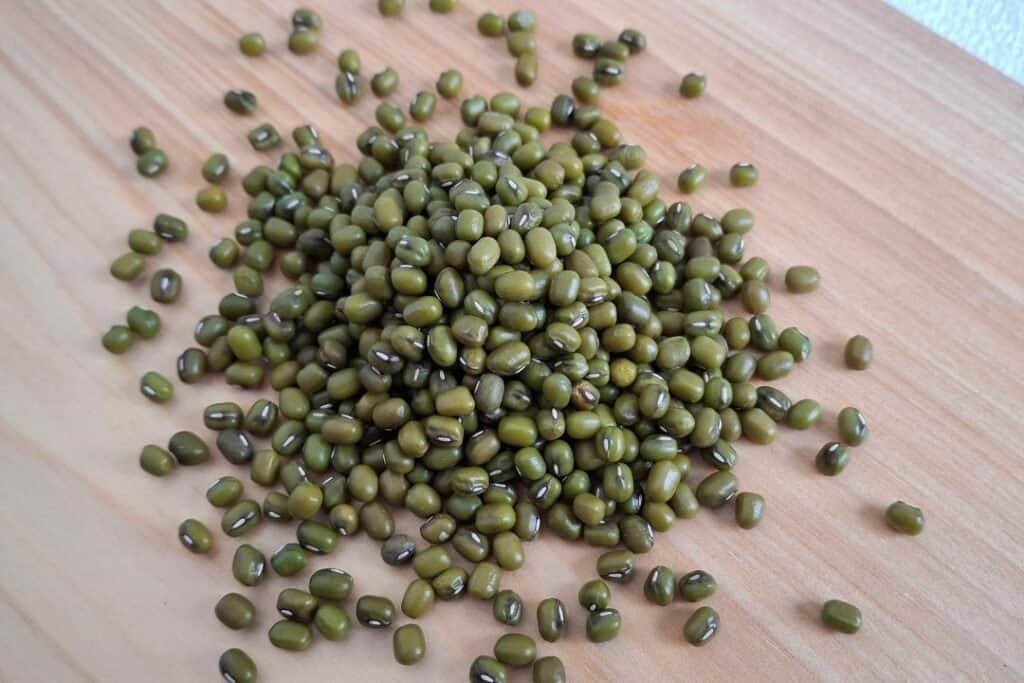
Mung beans are rich in essential nutrients, including protein, fiber, iron, magnesium, and B vitamins. They also have a natural cleansing quality that helps clear ama – the toxic residue that forms when digestion is weak. By improving Agni, the digestive fire, mung beans support the proper transformation of food into energy and help the tissues of the body absorb nutrients more efficiently.
From an energetic perspective, mung beans balance all three doshas. Their lightness pacifies Kapha, their cooling energy soothes Pitta, and their grounding yet non-heavy nature supports Vata. And because they are so easily digested, they are used in cleansing programs such as Panchakarma and are considered one of the most sattvic foods for maintaining clarity of body and mind.
Their energetic profile looks like this:
- Taste (Rasa): Sweet and astringent
- Energy (Virya): Cooling
- Post-digestive effect (Vipaka): Sweet
- Effect on Doshas: Balances all three doshas when prepared correctly
Moong Dhal in Ayurveda
Moong dhal, the yellow split version of mung beans, holds a special place in Ayurvedic cuisine. It is regarded as the most digestible of all legumes, making it suitable even for those with sensitive digestion or illness. Its smooth, creamy texture is easy to assimilate, and its mild flavor pairs beautifully with digestive spices like cumin, coriander, and turmeric. In Ayurveda, moong dhal is often described as the “mother of nourishment,” offering comfort, warmth, and stability to the system.
Moong dhal is frequently used in cleansing and rejuvenating diets because of its light yet nourishing properties. It supports gentle detoxification without depleting strength, making it perfect for balancing Vata and Kapha doshas. Pitta types can also benefit from it when cooked with cooling herbs and ghee. The combination of protein, fiber, and subtle sweetness makes moong dhal a grounding and sustaining food that supports steady energy throughout the day.
A simple bowl of moong dhal with rice, ghee, and warming spices is more than a meal; it’s basically the West’s equivalent of chicken noodle soup for the soul. When eaten mindfully, it helps reset digestion, calm the mind, and restore balance. This is why moong dhal is used in kitchari, the ultimate Ayurvedic healing food, known to restore vitality and strengthen Agni after fasting or illness.
Energetic Profile
Taste (Rasa): Sweet and astringent
Energy (Virya): Cooling
Post-digestive effect (Vipaka): Sweet
Effect on Doshas: Tridoshic when spiced and cooked appropriately; most balancing for Vata and Pitta
Moong dal recipe
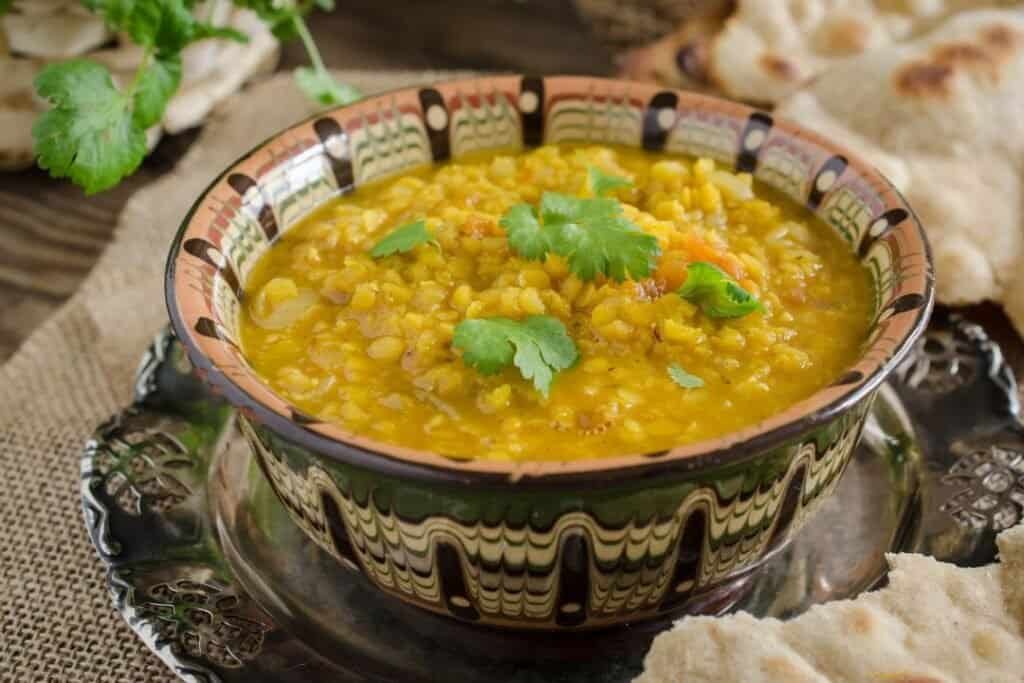
Moong dhal and mung beans are incredibly versatile and can be enjoyed in soups, stews, porridges, or even as sprouts. In Ayurveda, one of the most popular dishes is khichari. This is a simple combination of moong dhal, rice, ghee, and spices that supports gentle detoxification.
Here’s a basic Ayurvedic mung dal recipe you can try:
- Rinse 1 cup of yellow moong dhal and soak for 30 minutes.
- In a pot, warm 1 tablespoon of ghee and add cumin seeds, grated ginger, and a pinch of turmeric.
- Add the soaked dhal and 3 cups of water (more for a soupier texture).
- Simmer until soft, about 20–25 minutes.
- Add salt, lime juice, and fresh coriander before serving.
To make it dosha-specific:
- Vata: Add extra ghee, cumin, and a pinch of hing (asafoetida) to aid digestion.
- Pitta: Keep it mild — use coriander and coconut milk for cooling effects.
- Kapha: Add warming spices like ginger, mustard seeds, and black pepper.
My Ayurvedic Khichari Recipe
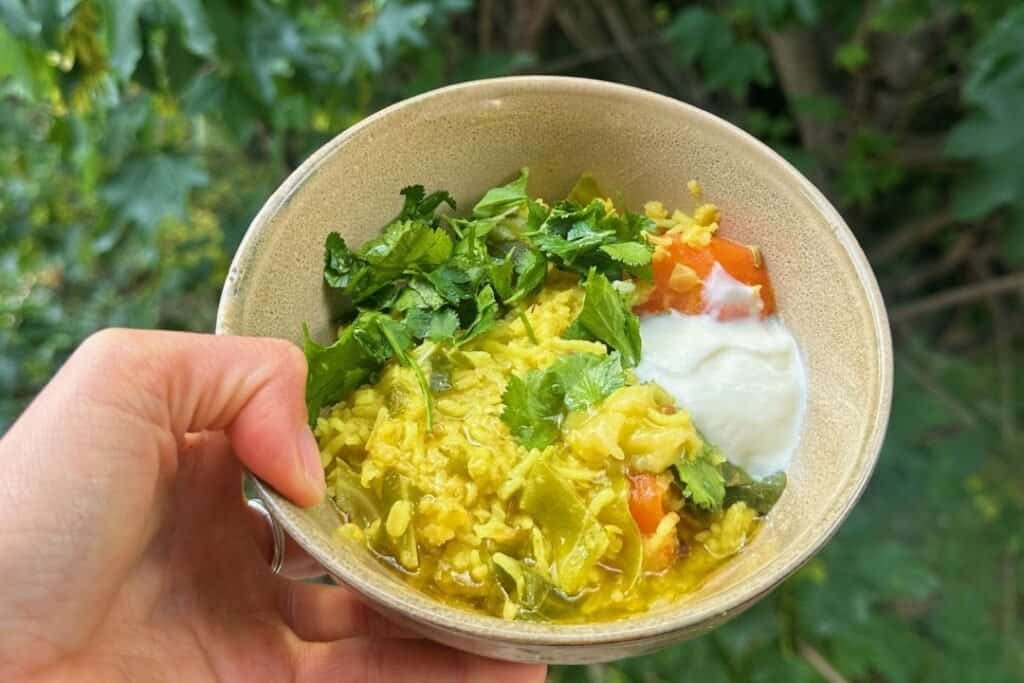
Kitchari, sometimes spelled khichari or khichdi, is Ayurveda’s ultimate comfort food — a simple, nourishing meal that gently detoxifies and rejuvenates the body. It’s a one-pot dish traditionally made with moong dhal (split mung beans) and basmati rice, lightly spiced and simmered until soft and porridge-like.
This humble recipe is deeply healing because it’s both cleansing and rebuilding. The combination of rice and lentils forms a complete protein, while the ghee and spices kindle Agni (digestive fire) and flush out Ama (toxins). Kitchari is tridoshic — meaning it can balance all three doshas — and can be adapted with ingredients and spices to suit Vata, Pitta, or Kapha. It’s often used during Ayurvedic cleansing programs or as a reset meal when digestion feels weak or sluggish.
Ingredients (Serves 2–3)
- ½ cup split yellow moong dhal (mung beans, washed well)
- ½ cup white basmati rice
- 1½ tablespoons ghee (or coconut oil for Pitta types)
- 1 teaspoon cumin seeds
- 1 teaspoon coriander seeds
- 1 teaspoon grated fresh ginger (or ½ tsp ground ginger)
- ½ teaspoon turmeric powder
- ¼ teaspoon fennel seeds
- 1½–2 cups seasonal vegetables (carrot, courgette, spinach, kale, green beans, or peas)
- 5 cups water (adjust for desired consistency)
- Sea salt to taste
- Fresh coriander leaves, lime wedge, and ghee for serving
Directions
- Rinse and soak the rice and moong dhal together for 15–30 minutes. Drain.
- In a medium pot, warm the ghee on low heat. Add the cumin, fennel, and coriander seeds and let them pop. Add ginger, turmeric, stirring gently until aromatic.
- Add the rice and moong dhal to the pot, stirring to coat them in the spices.
- Pour in the water, bring to a boil, then reduce to a gentle simmer.
- Add your chopped vegetables and a pinch of salt.
- Cover and cook for 30–40 minutes, stirring occasionally, until soft and porridge-like. Add more water if needed.
- Finish with a spoonful of ghee, a squeeze of lime, and fresh coriander before serving. It’s also traditionally served with a side of yogurt and some pickle.
Dosha Adjustments
Vata:
- Add more ghee and warming spices like cumin, asafoetida, cinnamon, and black pepper.
- Use root vegetables like carrots or sweet potatoes.
- Serve warm and slightly oily.
Pitta:
- Reduce spices; use cooling herbs like coriander and fennel.
- Replace ghee with coconut oil if preferred.
- Add sweet, cooling vegetables like zucchini, asparagus, and leafy greens.
- Use less ghee and rice, and increase spices (especially ginger, black pepper, and mustard seeds).
- Choose light, drying vegetables like kale, cabbage, or broccoli.
- Add a squeeze of lemon to enliven digestion.
Sprouted Mung Beans and Kitchari
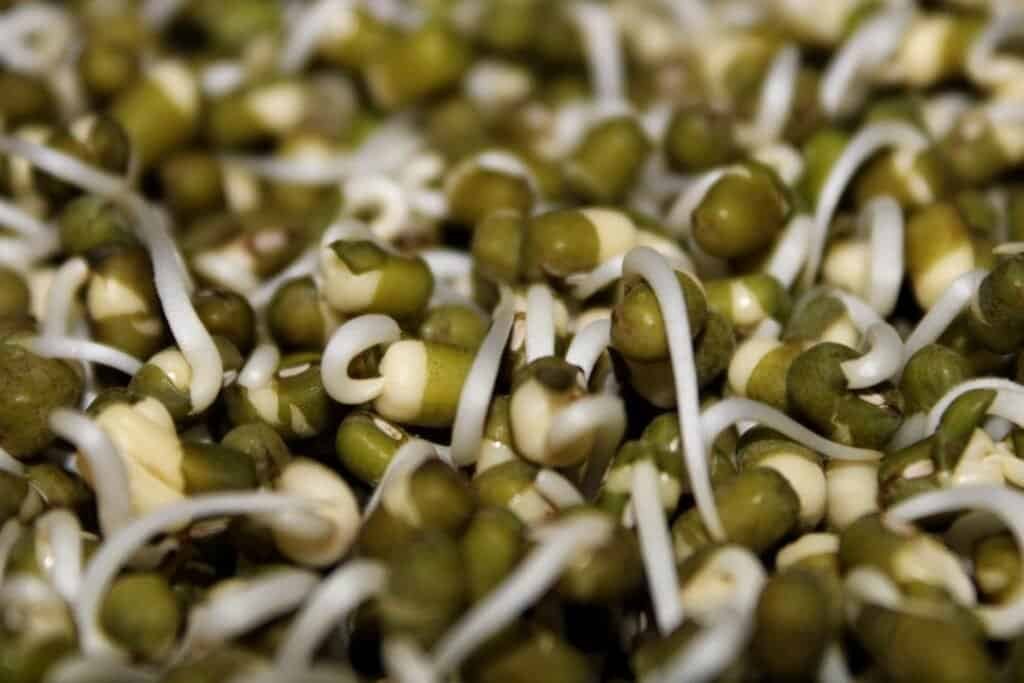
Sprouted mung beans are another Ayurvedic favorite, offering a lighter, more vibrant version of the cooked legume. The sprouting process increases the bean’s prana, or life force energy, and enhances its vitamin and enzyme content. Sprouted mung beans are cooling and cleansing, making them especially beneficial for Pitta and Kapha imbalances. They can be eaten raw in salads or lightly steamed for those with more sensitive digestion.
In contrast, kitchari—made with moong dhal—is warm, cooked, and grounding. It’s particularly recommended during seasonal transitions, cleanses, or times of stress when digestion needs extra support. Kitchari combines the simplicity of moong dhal with the lightness of basmati rice and the digestive power of spices like cumin, ginger, and turmeric.
Read: Black Seed Oil Health Benefits
FAQs About Mung Beans and Moong Dhal
Are mung beans and moong dhal the same thing?
Yes, they come from the same seed. Mung beans are whole and green, while moong dhal is the split and de-husked yellow version.
Which one is used for kitchari?
Moong dhal is typically used for kitchari because it cooks faster and is easier to digest.
Are mung beans good for all doshas?
Yes, when prepared correctly, mung beans and moong dhal are tridoshic and can balance Vata, Pitta, and Kapha.
Can I use sprouted mung beans in Ayurvedic cooking?
Absolutely. Sprouted mung beans are lighter and cooling, perfect for warmer weather or for Pitta and Kapha types.
Is there a difference in nutrition?
Both are rich in plant protein, minerals, and fiber. Sprouted or split forms tend to be easier on digestion and higher in enzymes.